

9 min read · Last updated October 20, 2026
- The federal Emergency Rental Assistance Program’s second round, known as ERA2, had its period of performance end on September 30, 2025, so help you find now runs on state, local, or nonprofit money, not that original federal pot.
- The Consumer Financial Protection Bureau (CFPB) tells renters to expect “several weeks” between applying for rental assistance and actually receiving funds, so it rarely resolves a notice due this week.
- A formal landlord repayment plan typically spreads back rent over six months to a year on top of your regular payment, per the CFPB’s own guidance for renters and landlords.
- Texas Property Code Section 92.108 makes it illegal for a tenant to redirect a security deposit to rent on their own, with a penalty of three times the amount withheld plus attorney’s fees – a reminder this route almost always needs your landlord’s sign-off first.
Emergency rental assistance is usually the cheapest option if your local program is still funded, a landlord repayment plan is the fastest one you control yourself, and using your security deposit is a last resort that in most states requires your landlord’s written consent.
In this article
- Emergency rental assistance: how fast it pays and what it requires
- Negotiating a repayment plan with your landlord
- Using or converting your security deposit
- How the three options compare
- Which option fits your situation
- What could change the calculus
- Frequently asked questions
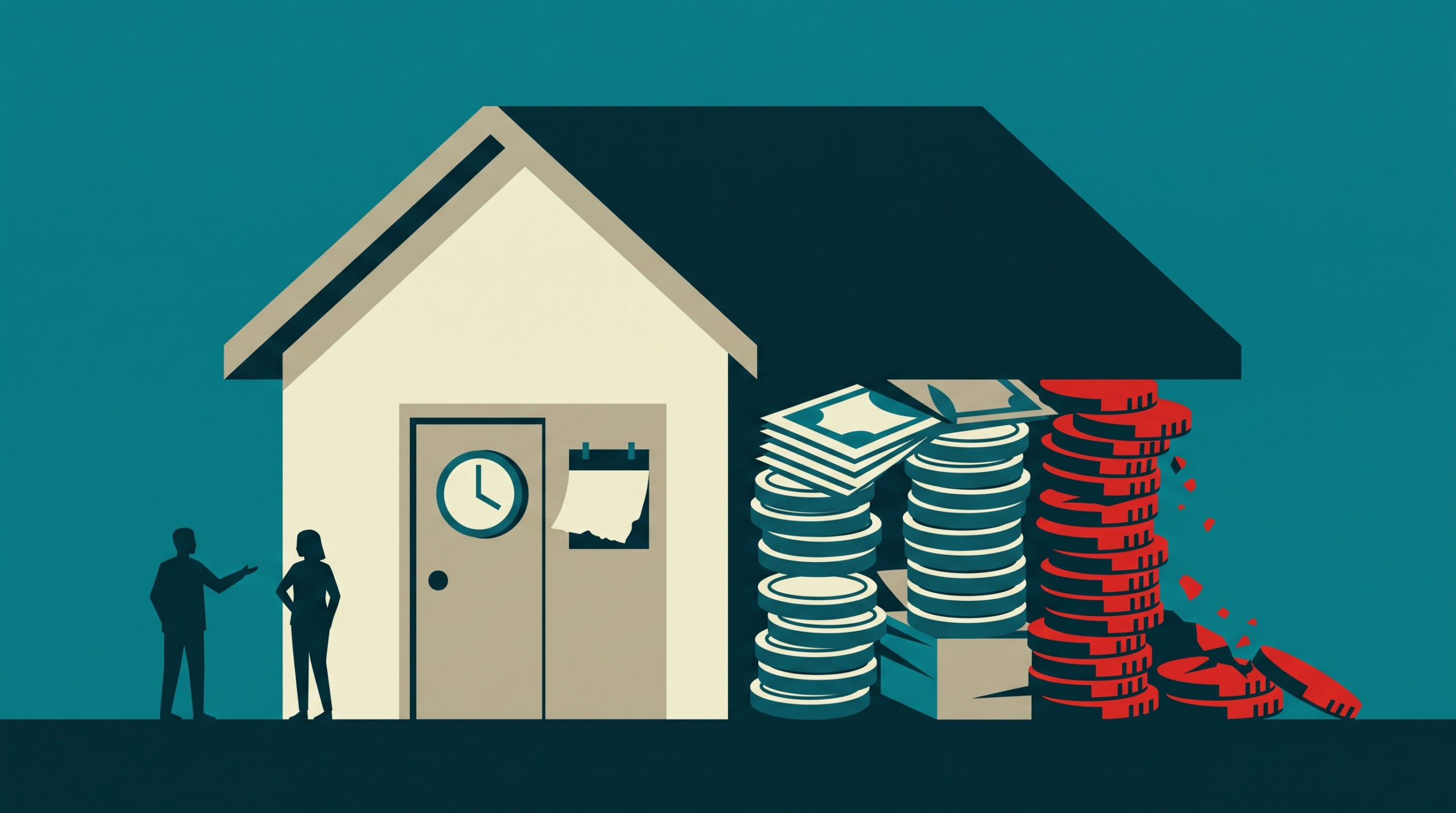
If you’ve fallen behind on rent, you’re generally choosing between three real paths: apply for emergency rental assistance through a local or state program, negotiate a repayment plan directly with your landlord, or use your security deposit (or ask your landlord to apply it) toward what you owe. Each path trades speed against cost differently, and the right one depends on how many months you’re behind, whether your landlord will put something in writing, and whether rental-assistance funding is actually open in your area right now – many local programs pause the moment their yearly budget runs out.
Emergency rental assistance: how fast it pays and what it requires
Emergency rental assistance covers the gap directly: a local housing agency, a state program, or a nonprofit pays your landlord some or all of what you owe. The federal money that built most of these programs during the pandemic is gone. The U.S. Department of the Treasury confirms that the period of performance for its second Emergency Rental Assistance round, ERA2, ended on September 30, 2025, and grantees can no longer use those award funds to help renters. That doesn’t mean rental assistance has disappeared everywhere – it means today’s programs run on state, city, or charitable budgets with their own cutoff dates, so check whether one is actually still accepting applications before you count on it.
The CFPB’s own guide for renters points to local organizations, your town or county government, or 211 for a specialist who tracks current funding. The same page is direct about timing: “After applying it may take several weeks to receive rental assistance funds,” so this isn’t the option for a notice due in days. Many programs also need your landlord’s cooperation; some pay the landlord directly and require the landlord to complete part of the application, so an uncooperative landlord can stall this route even when money exists. Behind on utilities instead of rent? That’s a separate program, the Low Income Home Energy Assistance Program (LIHEAP), not this one.
Negotiating a repayment plan with your landlord
A repayment plan is the option you control without waiting on a third party. The CFPB lays out the actual menu landlords use: adjusting your due date to land closer to payday, waiving late fees as long as you keep paying something, temporarily accepting a lower rent amount, or a formal repayment plan that adds a portion of what you owe to each month’s rent, typically over six months to a year. None of that requires an application, a waiting list, or new paperwork beyond your existing lease.
What it does require is a landlord willing to say yes, and nothing in federal law forces one to agree. The CFPB’s guidance on facing eviction notes that it’s very rare for a landlord to prefer going through the eviction process over getting paid – part of why this conversation works more often than renters expect, though not always. A landlord who’s already decided to re-rent the unit has little reason to negotiate. This route also protects your security deposit completely; it stays untouched and still comes back to you at move-out under your state’s rules. The real risk is informality: a verbal “catch up when you can” is not enforceable. Get the new schedule in writing, signed by both of you.
Using or converting your security deposit
A security deposit is held against damage and unpaid charges, typically settled at move-out, not a reserve you or your landlord can tap mid-lease just because it exists. State law controls this, and rules vary more than most renters assume. Texas law flatly prohibits a tenant from redirecting a deposit to rent: Property Code Section 92.108 makes a tenant who tries it liable for three times the amount withheld plus the landlord’s attorney’s fees, with one narrow exception for a lease ended early over an unrepaired health or safety problem. Los Angeles County’s consumer protection office describes the more common pattern: a landlord can apply the deposit to past-due rent, but the county’s own guidance ties that specifically to when a tenant moves out, not while you’re still living there.
In practice, this option almost never starts with the tenant. A landlord voluntarily agrees, in writing, to release or apply the deposit early, usually because a tenant catching up beats a vacancy. If your landlord agrees, this can be the fastest option here, sometimes same-day. It’s also the only one that costs you something real even when it works.
How the three options compare
The real trade-off across all three is speed against cost: the fastest option, the deposit, is also the one that leaves you with the least cushion afterward.
| Factor | Emergency Rental Assistance | Landlord Repayment Plan | Security Deposit |
|---|---|---|---|
| Typical time to resolve | Often several weeks after approval, per the CFPB | Can be agreed within days if your landlord cooperates | As fast as your landlord’s written agreement, sometimes same-day |
| What it requires from you | An application, proof of income or hardship, often landlord cooperation | A conversation and a signed written agreement, no third party | Your landlord’s voluntary written consent; state law decides whether this is even allowed |
| Protects against an eviction filing | Not automatically; a few local courts pause filings for a pending application, most don’t | Reduces the immediate reason to file, but only as strong as the written agreement | No independent protection beyond whatever the landlord agrees to |
| Effect on your deposit refund | None, deposit stays intact | None, deposit stays intact | Deposit is spent; nothing left to refund at move-out |
| Who has to say yes | A local or state program administrator, often plus your landlord | Your landlord | Your landlord, within your state’s deposit law |
| Best for | Renters whose local program is confirmed open and who can wait a few weeks | Renters whose landlord will deal directly and who want to protect their deposit | Renters days from a court date whose landlord will agree in writing |
Which option fits your situation
Choose rental assistance if you’re not yet facing a court date, your local 211 line or housing agency confirms funding is open, and you can wait a few weeks for payment to clear. It costs nothing extra and leaves everything else untouched.
Choose a repayment plan if your landlord will talk to you directly, you want to avoid touching your deposit, and you can realistically afford rent plus a reasonable add-on for six months to a year. Raise it early, before your landlord has decided to file.
Choose the deposit route if every other option has stalled, you’re within days of a hearing or lockout, and your landlord will put the agreement in writing. Treat it as a last resort, since it’s the only option that leaves you without a refund.
What could change the calculus
A few facts can flip which option makes sense. Whether your local program is actually accepting applications right now matters more than whether one exists on paper, since many run out of money mid-year. How many months you’re behind changes your leverage: a landlord weighing one month behind against the cost of a vacancy sees a different equation than one weighing three months behind. Whether your lease already designates part of the deposit as “last month’s rent” changes the legal analysis on that route. And once an eviction lawsuit is filed, your timeline changes entirely – a program that takes several weeks to pay out may not finish before a scheduled hearing, even if approved.
Frequently asked questions
How do I find out if emergency rental assistance is still available where I live? Call 211 or search for your city or county’s housing department, since funding status changes throughout the year as local budgets are spent down. The CFPB’s renter help page recommends starting with local and state organizations directly, rather than assuming a program that existed last year is still open or funded the same way today.
Will asking my landlord for a repayment plan hurt my credit? Asking doesn’t report anywhere by itself. The risk is what happens if you fall behind on the new plan too: unpaid rent sent to a debt collector can appear on your credit report and in tenant screening reports landlords use for your next rental, which is exactly what a written, affordable repayment plan is meant to prevent.
Can my landlord refuse to let me use my security deposit for back rent? Yes, and in some states a landlord doesn’t even have the option to say yes. Texas, for example, makes it illegal for a tenant to redirect a deposit to rent without a specific exception, regardless of what the landlord agrees to. Check your own state’s rules before assuming this route is available to you at all.
What happens if I don’t resolve this before my eviction hearing? Showing up still matters even at this point. The CFPB’s own guidance says too many renters give up before they get a chance to go to court, when responding to the case can raise facts that help you or let you object to inaccurate claims. A pending rental-assistance application or a partial payment plan can sometimes still factor into what a court allows.
Can I combine more than one of these options at once? Yes, and many renters do. A partial payment now, a signed repayment plan for the rest, and a pending rental-assistance application that pays down whatever’s left aren’t mutually exclusive. The one combination to avoid is leaning on your security deposit as a quick fix while better options are still realistically available, since it’s the hardest one to undo.
No responses yet